Why seasonal fly management requires a multi-layered defense
Effective equine fly defense never relies on a single bottle of spray or an isolated piece of mesh. Biting insects encompass dozens of distinct species, from minute midges and stable flies to massive horseflies, and each species hunts, feeds, and reproduces differently. A horse left in a turnout pen with only a light morning misting of repellent will often end up stomping defensively by early afternoon as chemical barriers degrade under sweat and sunlight.
Successful pest management blends chemical deterrents, physical barriers, and daily facility hygiene. When you combine breathable turnout gear with strategically applied topical repellents and consistent manure cleanup, you disrupt the life cycles of nuisance insects while keeping your horse calm. Stomping and tail-swishing waste valuable energy, cause joint concussion, and loosen shoes over time, making pest control an essential component of regular horsekeeping.
Equine owners boarding their animals at equine boarding facilities often find that collaborative habits make the biggest difference. While you can manage your individual horse's personal turnout sheets and fly masks, community awareness around manure removal and standing water dictates overall insect pressure across the property. Establishing a daily routine tailored to your region ensures your horse stays comfortable from early spring through the first hard autumn frost.
Understanding fly spray formulations and active ingredients
Walking down the barn aisle reveals shelves lined with commercial sprays, yet their active ingredients generally fall into three distinct categories. Natural pyrethrins, harvested from chrysanthemum blooms, provide immediate knockdown power against landing pests but break down quickly when exposed to direct sunlight. Synthetic pyrethroids, such as permethrin and cypermethrin, bond longer to the hair shaft and resist ultraviolet degradation, providing protection that typically lasts through a full turnout session.
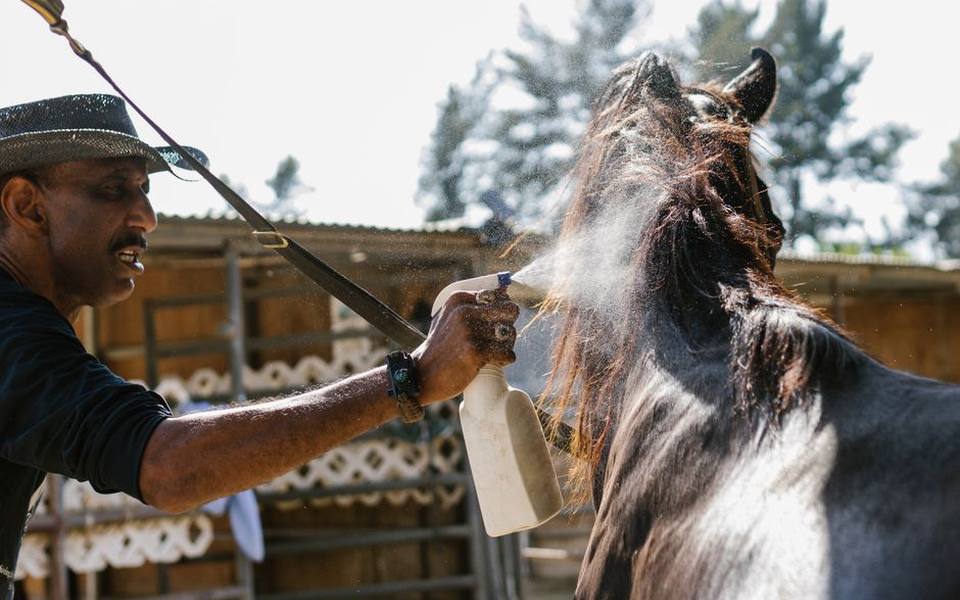
Water-based formulations remain the gentlest choice for sensitive skin and collect less paddock dust than heavy carriers. Oil-based sprays create a sleek sheen that locks onto the hair coat and withstands moderate sweating, though they can attract dirt in sandy arenas and occasionally cause heat buildup if applied heavily in blazing midday sun. Botanically based mixtures relying on clove, citronella, thyme, or geraniol offer a milder, chemical-free scent profile, though they generally require more frequent reapplication throughout humid afternoons.
Selecting the right spray for flies on horses depends largely on your riding schedule, climate, and the animal's individual skin sensitivity. Horses prone to sweet itch or hives from chemical additives often perform better with gentle, water-based solutions applied twice daily. Meanwhile, horses spending long stretches out on pasture board benefit from oil-stabilized or silicone-fortified formulas designed to cling to the hair coat despite dew and light precipitation.
Applying topical repellents for maximum longevity and safety
Applying equine fly spray properly requires thorough grooming before the nozzle ever opens. Spraying a layer of mist directly over crusted sweat, dried mud, or pasture dust ensures the repellent bonds only to dirt particles that shake loose minutes later. Brushing the coat clean allows the liquid to settle deep onto the hair shafts, creating an unbroken barrier across the shoulders, flank, belly, and dock where biting insects congregate.
Safety around sensitive facial tissue demands careful technique rather than wide spray patterns. Never point a trigger nozzle directly toward a horse's eyes, nostrils, or ears, where sudden vapor can cause panic or chemical conjunctivitis. Instead, saturate a soft grooming mitt or clean microfiber cloth and gently wipe the product along the forehead, cheekbones, and under the jawline, keeping clear margins around delicate eyelids and pink muzzle skin.
Paying attention to the horse's underside yields better relief than saturating the top of the back. Stable flies prefer feeding on the lower legs and under the midline of the belly, which are areas frequently missed during a hurried grooming routine. Take the extra time to crouch safely beside the shoulder and mist the chest, groin, and ventral midline to stop swarming insects from settling beneath the barrel.
Targeting aggressive horseflies and vicious biting pests
Aggressive pests like deer flies and horseflies belong to the tabanid family, and their hunting behavior differs sharply from standard barn flies. These formidable insects hunt primarily by sight, tracking warmth, silhouette, and movement across open fields. Because they slash the skin to pool blood rather than pierce delicately, their bites cause severe pain that can prompt horses to bolt, rear, or kick out unexpectedly while under saddle.
Standard pyrethroid fly horse spray often fails to deter hungry tabanids because these insects attack decisively and tolerate mild chemical contact long enough to bite. Finding a dependable insect repellent for horse flies typically involves looking for formulas with higher concentrations of permethrin, piperonyl butoxide, or specialized fatty acid repellents that confuse the insect's directional sensory receptors. Even then, chemical defense against these visual hunters is rarely complete on its own.
When tabanids peak during midsummer, timing your rides and turnout around insect activity becomes essential. Horseflies thrive in warm, calm, sunny weather near woods and wet margins, while remaining less active during breezy mornings or inside shaded buildings. Riders enjoying boarding stables with trail access often carry fly whisks, clip-on acoustic repellents, or ride during cooler dawn hours to avoid the relentless pursuit of large biting flies along timber lines.
Protecting lower limbs, hooves, and ground contact zones
Stable flies cause the vast majority of lower-leg agitation, hovering near hooves and ankles where skin is tight over bone. The sharp pain of their bites induces constant stomping, which can crack hoof walls, wear down nail clinches, and loosen expensive metal shoes. Treating the lower legs requires a consistent strategy that safeguards both the hair and the coronet band against relentless biting pressure.
Applying a protective ointment, heavy cream, or specialized horseshoe fly repellent around the coronary band and lower pastern creates a slick barrier that biting pests cannot navigate. Some equestrians apply thick mineral-based balms or pine tar blends around the hoof capsule to deter flies drawn to moisture in the hoof clefts. Keeping these lower margins protected reduces the stomping reflex that causes shoe loss during peak insect season.
Breathable, rigid mesh fly boots represent the most dependable non-chemical defense for equine legs. High-quality boots feature plastic stays that prevent them from slumping down around the ankle while allowing continuous airflow across the tendons. Covering the leg from coronet to knee completely stops biting pests from reaching vulnerable skin, eliminating the constant concussion of stamping hooves while turning out on dry summer ground.
Selecting the right equine fly sheet for your turnout needs
A well-constructed horse fly sheet provides an impenetrable physical barrier against flying insects while shielding sensitive coats from harsh ultraviolet bleaching. Modern equestrian sheets utilize high-density mesh weaves, ranging from soft micromesh to stiff, heavy-duty polymer fabrics that resist snags from pasture fencing. Choosing the proper material depends on whether your horse prioritizes maximum breathability in swampy humidity or tear resistance in rough herd environments.
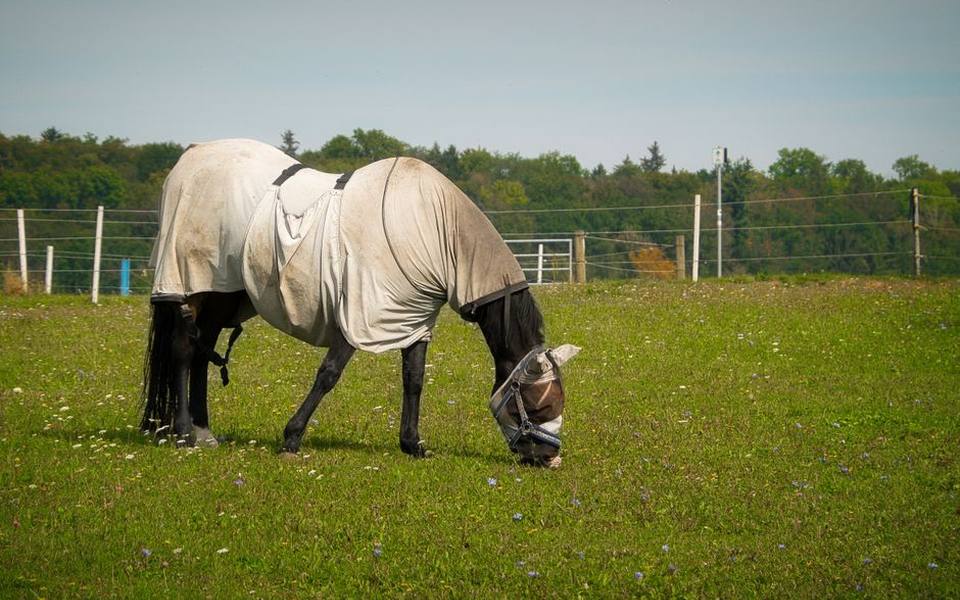
Coverage designs vary significantly across manufacturers, with options including integrated neck covers, expansive belly bands, and oversized tail flaps. A generous belly wrap proves indispensable for horses that suffer from insect bite hypersensitivity along the midline, preventing culicoides midges from causing painful crusting and hair loss. Tail flaps should extend past the dock to work in harmony with natural swishing, sealing off the vulnerable hindquarters from swarming pests.
When shopping for turnout wear, examining hardware and seam construction is just as critical as evaluating mesh weight. Options like a horze fly sheet or similar performance designs often incorporate elasticized shoulder gussets and fleece-lined withers to facilitate fluid movement during grazing. The goal is complete physical coverage without trapping internal body heat or restricting your horse's natural stride out in the field.
Fitting protective sheets and gear to prevent rubs and heat stress
A fly sheet that fits poorly creates more discomfort than the insects it was designed to deflect. If a sheet hangs too tight across the chest, it exerts constant backward pressure that strips hair from the points of the shoulders and withers within days. Conversely, an oversized garment shifts sideways as the horse rolls, creating hazardous entanglement risks with leg straps and belly surcingles.
Daily inspections are non-negotiable whenever horses wear mesh turnouts in warm weather. Dust and loose shed hair collect on the underside of the fabric, forming an abrasive paste when mixed with sweat that quickly abrades delicate skin. Removing the sheet once or twice each day to groom the horse and inspect the withers, chest, and stifle regions prevents rub marks from turning into painful open sores.
Climate plays a major role in determining whether a horse should wear sheets during peak daytime hours. In humid southern regions, such as properties operating as horse boarding stables in Florida, intense humidity combined with full-coverage sheets can impair the horse's ability to cool itself through sweating. On exceptionally stifling afternoons, moving the horse into a well-ventilated stall under heavy fans is far safer than leaving them sheeted under direct sun.
Pasture management tactics to eliminate breeding grounds
Topical products and turnout sheets only address the insects already buzzing around your horse; breaking the underlying life cycle requires aggressive pasture management. Most biting flies reproduce in moist organic material, wet manure piles, rotting hay, and stagnant puddles. Eliminating these hospitable nurseries drastically slashes adult insect populations across your entire property without spraying a single ounce of chemical repellent.
Dragging pastures regularly during dry, sunny weather breaks apart manure piles and exposes fly larvae to desiccating heat. In smaller paddocks, picking up manure droppings daily or every other day prevents stable flies from completing their two- to three-week reproductive cycle. Managing round bale feeding stations is equally vital, as trampled hay mixed with moisture and urine creates an ideal breeding medium for biting pests.
Managing standing water across turnout acreage removes prime habitat for mosquitoes and midges that spread dangerous blood-borne pathogens. Keep stock tanks clean, scrub away interior algae, and ensure gutters divert rainfall far away from high-traffic paddock gateways. If low-lying ground pools water after seasonal rains, stocking those retention areas with safe biological larvicides prevents mosquito eggs from maturing into biting adults.
Barn environment controls and stall ventilation solutions
Inside the barn, air movement serves as one of the most cost-effective deterrents against weak-flying insects. Midges, mosquitoes, and barn flies struggle to navigate through strong air currents, making directional stall fans an invaluable tool for summer comfort. Positioning commercial-grade, sealed-motor agricultural fans toward the center of each stall keeps air circulating continuously while preventing insects from landing on resting horses.
Automated overhead misting systems provide scheduled knockdowns across barn aisles and stall interiors, releasing minute bursts of natural pyrethrin mist at regular intervals throughout the day. When paired with tightly woven window screens and light-blocking shades, indoor stalls become peaceful sanctuaries during the peak heat of the day. Riders training in indoor arenas often appreciate how enclosed, ventilated environments minimize fly-related tail-wringing and loss of focus during schooling sessions.
Biological warfare using beneficial insects, commonly known as fly parasites or fly predators, offers outstanding long-term population reduction when deployed early in the spring. These tiny, non-stinging wasps lay their own eggs inside fly pupae, killing the pest before it ever matures into a biting adult. Releasing fresh batches of pupae near manure storage areas each month systematically reduces fly emergence across the boarding facility without leaving chemical residues.
Adapting your seasonal defense plan to shifting weather patterns
A fly control regimen must evolve as temperatures fluctuate and insect populations transition from spring emergence to autumn die-offs. Early spring often brings gnats and midges that target ears and bellies, requiring light salves and fine-mesh masks long before heavy horseflies appear. As summer heat intensifies, sweating increases, requiring more resilient oil-based repellents and breathable turnout gear that withstands high ultraviolet exposure.
Late summer and early autumn frequently trigger a surge in aggressive stable fly populations looking for final blood meals before cool weather sets in. During this transitional window, bot flies also become active, hovering near knees and shoulders to glue sticky yellow eggs onto the hair shafts. Daily scraping with a bot blade removes these eggs before the horse licks and ingests them, preventing internal parasitic infestations.
Maintaining realistic expectations prevents frustration as weather patterns shift between torrential summer downpours and oppressive droughts. No single equestrian fly spray or turnout accessory repels every winged pest entirely across twenty-four hours. By monitoring pasture moisture, cleaning stalls rigorously, refreshing physical barriers, and applying targeted repellents with proper technique, you ensure your horse stays protected, healthy, and focused all season long.
Published 2026-09-20 · reviewed with each rebuild, last September 2026.
Find boarding stables near you
The directory lists 16,945 boarding stables by state and city — pick your state or use the “Near me” button in the header.
More guides
-
 Money
MoneyUnderstanding Monthly Horse Boarding Expenses and Stable Fees
-
 Owning
Understanding Friesian Horse Ownership: Traits, Costs, and Daily Care
-
 Owning
Understanding Riding Disciplines, Essential Tack, and the True Costs of Horse Ownership
-
 Money
MoneyUnderstanding the Costs of Getting Started in the Saddle
-
 Buying
Understanding Initial Horse Purchase Prices by Breed, Size, and Training
-
 Service
The Career Path of a Farrier: Education, Training, and Timeline
-
Owning
Choosing Between Alfalfa and Orchard Grass Hay for Horses
-
 Money
MoneyEssential Horse Ownership Expenses: Leasing, Insurance, and Maintenance
-
 Owning
Complete Guide to Cattle Breeds: Dairy vs Beef Cow Selection and Care
-
 Buying
Horse Buying Guide: Breed Selection, Market Prices, and Classifieds
-
 Owning
Small Farm Livestock Breeding: Goats, Sheep, Pigs, and Poultry
-
 Buying
Miniature Livestock Guide: Mini Cattle, Ponies, and Pocket Equines
-
 Owning
The Complete Guide to Horse Boarding, Stables, and Facilities
-
 Owning
Rubber Stall Mats and Horse Stall Flooring: A Complete Guide
-
 Buying
Guide to Horse Breeds, Breeders, and Equine Artificial Insemination
-
 Buying
Equestrian Riding Boots Buyer's Guide: Western and English Footwear
-
 Owning
Equine Health Care: Colic Signs, Deworming Charts, and Joint Supplements
-
 Safety
Equine Riding Helmets: Sizing, Safety Standards, and Selection Guide
-
 Service
Beach Horseback Riding and Trail Riding Tours Guide
-
 Service
Equine Training Fundamentals: Groundwork, Lunging Techniques, and Equestrian Vaulting
-
 Service
Equine-Assisted Therapy and Psychotherapy: A Practical Guide to Methods, Benefits, and Programs
-
 Buying
A Complete Guide to Buying a Horse: Breeds, Equine Sales, and Insurance
-
 Owning
Complete Guide to Horse Hoof Care, Farrier Services, and Hoof Boots
-
 Owning
A Complete Guide to Horse Grooming, Sheath Cleaning, Massage, and Routine Wellness
-
 Owning
Horse Barn Setup, Stall Infrastructure, Arenas, and Facility Equipment
-
 Buying
Beef and Dairy Cattle Breeds: Buyer's Guide, Traits, and Livestock Care
-
 Owning
Homestead Livestock Guide: Raising Sheep, Goats, Pigs, and Poultry
-
 Service
Equine Dentistry Guide: Floating Teeth, Routine Care, and Choosing a Practitioner
-
 Owning
Equine Saddles and Tack Care: Selection, Fit, Cleaning, and Room Setup
-
 Owning
Horse Blankets and Sheet Guide: Fit, Turnout Types, and Fly Protection
-
 Safety
Equestrian Riding Apparel and Gear: Helmets, Boots, and Show Attire
-
 Owning
Equestrian Gift Guide: Practical and Thoughtful Presents for Horse Lovers and Riders
-
 Service
Horse Transportation Guide: Hauling Services, Trailer Rentals, and Layover Stables
-
 Owning
Designing and Managing a Boarding Stable: Facility Planning, Barn Construction, and Daily Operations
-
 Owning
Horse Health Care, Fly Control, and Preventative Vet Schedules
-
 Service
Beginner Equestrian Camps and Riding Programs: How to Choose the Right Barn
-
 Safety
A Complete Guide to Western Riding Helmets, Barn Footwear, Halters, and Hoof Gear
-
 Service
Guided Horseback Riding Tours & Vacation Stables Guide
-
 Buying
Buying and Selling Horses: Sales Auctions & Breed Marketplaces