The Essential Anatomy of Safe Equestrian Footwear
A proper equestrian boot is first and foremost a piece of safety equipment designed to keep a rider's foot from sliding through the stirrup iron. Whether you ride hunt seat, dressage, or Western disciplines, any boot taken into the saddle requires a distinct heel with a defined ninety-degree breast, measuring roughly one to one-and-a-half inches in height. Riding in flat sneakers, running shoes, or hiking footwear creates a severe safety hazard because soft rubber lugs can wedge into an iron, preventing your foot from releasing cleanly during an emergency dismount.
Beyond the heel, dedicated riding footwear features a rigid internal shank constructed from tempered steel, composite nylon, or fiberglass. This rigid bridge spans the arch between your heel and the ball of your foot, distributing your body weight across the stirrup bar without collapsing the sole under your downward heel pressure. When riders begin their initial horse riding lessons, instructors immediately verify that their boots possess this structural rigidity to support balance while posting the trot or maintaining a two-point position.
The outer sole of a riding boot must balance grip on barn surfaces with smooth release in the stirrup. Heavily lugged work soles or aggressive mountain treads can trap your foot sideways in the stirrup tread, whereas completely slick street soles offer dangerous slip when walking on damp wash rack concrete or slippery stall mats. Equestrian manufacturers craft specialized low-profile tread patterns featuring subtle micro-grooves and beveled edges designed to grip the stirrup pad securely while sliding free instantly when angle of pressure changes.
Understanding Western Boots for Women in and Out of the Saddle
Western boot construction differs significantly from English footwear, leaning heavily on slip-on convenience, high arches, and durable leather shafts designed to protect the lower leg from brush, saddle fenders, and horn rubs. When shopping for western ladies boots, buyers often encounter two distinct categories: fashion-forward casual footwear meant for street wear and functional riding boots engineered specifically for stirrup work. Fashion boots often feature decorative thin soles, wooden pegs, high fashion heels, and fragile stitching that deteriorate quickly under barn moisture and horse urine.
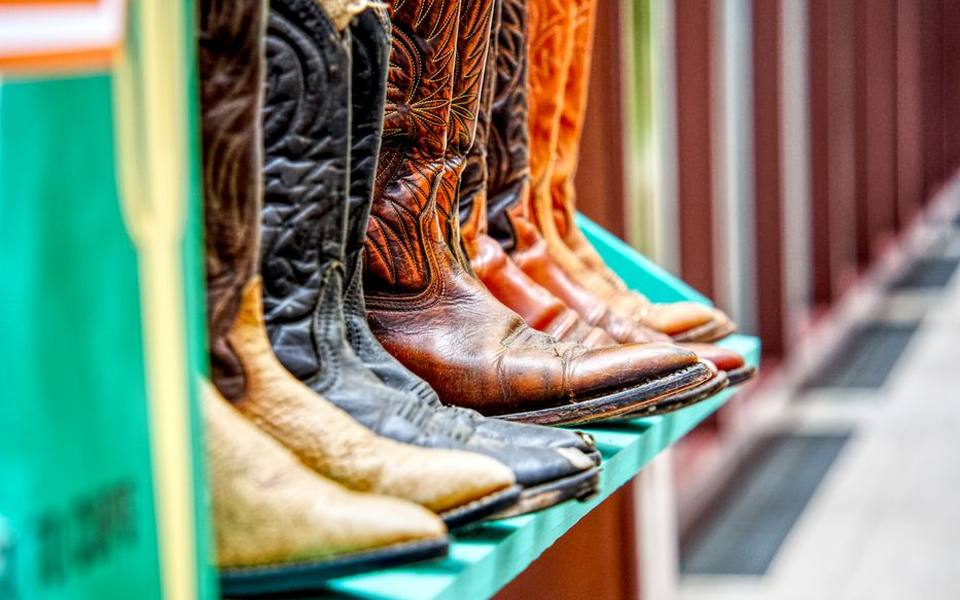
A true working or arena boot built for western riders features a traditional riding heel, often called a cowboy or underslung heel, or a broader walking heel known as a roper heel. Roper heels tend to be lower, roughly an inch to an inch and a quarter, with a broad base that offers superb comfort during long hours of groundwork, saddling, and stall chores. Underslung heels slope slightly forward, locking into deep western stirrup treads and keeping the heel securely anchored when riding spirited maneuvers or navigating rugged terrain at boarding stables with trail access.
Toe shape also influences riding utility. Traditional pointed or narrow snip toes slip quickly into narrow bell stirrups or wooden trail stirrups, which is why historical ranch boots favored taper. However, modern wide square toes and traditional round roper toes have become exceptionally popular because they allow natural toe splay and reduce foot fatigue during extended days in the saddle. Look for double-stitched welts around the toe box, which protect the perimeter leather from scuffing against heavy leather stirrup fenders and fence rails.
Paddock Boots as the Daily Workhorse of English Tack Rooms
Ankle-height footwear, traditionally known as paddock boots or jodhpur boots, represents the foundation of English riding wear. These compact leather boots end just above the ankle joint, offering flexibility, ground comfort, and breathability for everyday schooling, grooming, and stable work. Unlike tall boots, paddock models allow natural flexion of the ankle without the restrictive stiffness of a full leather calf, making them the standard choice for young riders, adult beginners, and trainers working horses on the ground before mounting.
Paddock boots come in two primary closure systems: front zipper or traditional front lace. Zip-front models offer rapid entry and exit, utilizing durable brass or heavy-duty nylon zippers flanked by elastic side gussets that stretch as the ankle moves through dynamic riding positions. Lace-up boots require slightly more time to fasten, but they provide a far more customizable fit through the instep and ankle, which accommodates riders with high arches, wide ankles, or fluctuating foot swelling during summer heat.
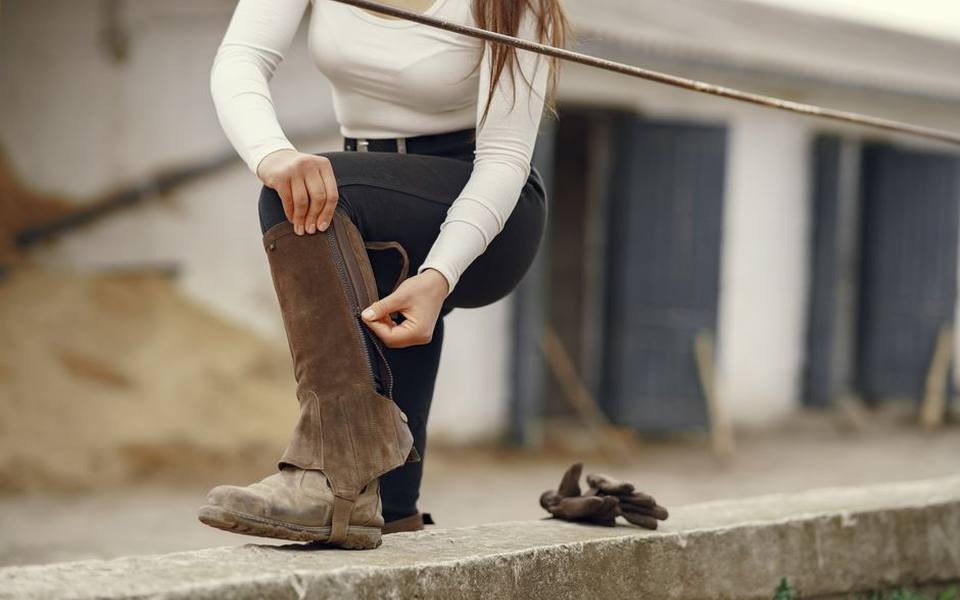
While paddock boots can be ridden alone in casual settings or initial riding classes offered at local barns, pairing them with half chaps creates the functional feel of a tall boot. Half chaps wrap around the lower leg from ankle to knee, preventing the stirrup leather from pinching the rider's bare calf against the saddle flap. This modular combination gives riders durable, affordable protection for daily training sessions while preserving their formal footwear for competitive events.
Field Boots Versus Classic English Dress Boots
When stepping into the realm of tall English riding boots, riders choose between two primary silhouettes: field boots and dress boots. Field boots feature decorative, functional laces at the front of the ankle, a detail derived from historic cavalry uniforms where mounted officers required ankle flexibility when jumping obstacles or galloping across country. The laced throat allows riders to shorten or lengthen their stirrups and sink their heels deeply without bunching thick leather painfully across the top of the foot.
Conversely, english riding dress boots feature a completely smooth, unlaced front ankle, creating an unbroken, elegant line of leather along the front of the lower leg. Dress boots remain the traditional standard for dressage arenas, formal fox hunting fixtures, and certain classic show jumping divisions. Because they lack laces, traditional dress boots demand precise patterning through the ankle to prevent unsightly folds from creasing the leather outward, giving a pristine and polished profile against the horse's barrel.
Both styles generally incorporate a high Spanish cut on the outside of the knee, which curves upward along the outer leg to visually elongate the rider's lower limb while scooping lower at the back of the knee to avoid pinching tendons. Field boots dominate the hunter, jumper, and eventing rings due to their forgiving ankle flexion over fences, whereas dress boots remain beloved by classical dressage riders who prefer a structured, upright leg position that encourages quiet contact.
Tall English Boots for Ring Work and Schooling
Historically, pulling on a pair of tall english horseback riding boots involved boot hooks, talcum powder, and significant physical effort, as traditional models lacked zippers entirely. Today, modern english horse riding boots feature full-length rear zippers running from heel to knee, secured with leather snap tabs at the collar to prevent the slider from migrating downward during intense schooling sessions. This modern construction allows a custom-like contour through the calf without the ordeal of traditional pull-on boots.
A proper pair of tall equestrian english riding boots acts as a supportive second skin, dampening lower-leg chatter and keeping your leg securely stabilized against the saddle flap. The interior calf often incorporates textured or grippy leather panels that improve friction against the saddle without damaging high-end flap leather. Riders preparing mounts for competition or schooling in facilities with indoor arenas often keep tall boots reserved strictly for mounted work to protect the delicate inner calf leather from abrasive stall bedding and wet mud.
Selecting tall boots requires understanding your discipline's expectations. While black remains the mandatory standard across dressage and hunter rings, rich cognac and dark Havana brown tall boots have gained substantial traction in schooling rings, schooling shows, and cross-country phases. High-grade box calfskin offers the most refined feel, molding effortlessly to the contours of your leg, while heavier cowhide offers greater longevity for everyday schooling duties.
Modern Athletic Ergonomics in Performance Riding Footwear
Over the past three decades, equestrian footwear design has undergone an ergonomic revolution, borrowing advanced biomechanical engineering from performance running shoes and hiking boots. Where riders once endured stiff wood-shanked boots with minimal internal cushioning, modern athletic equestrian boots utilize multi-layered footbed systems. These integrate shock-absorbing EVA midsoles, gel heel cushions, and contoured antimicrobial insoles designed to reduce fatigue when walking extensive barn aisles or standing in stirrups for consecutive training sessions.
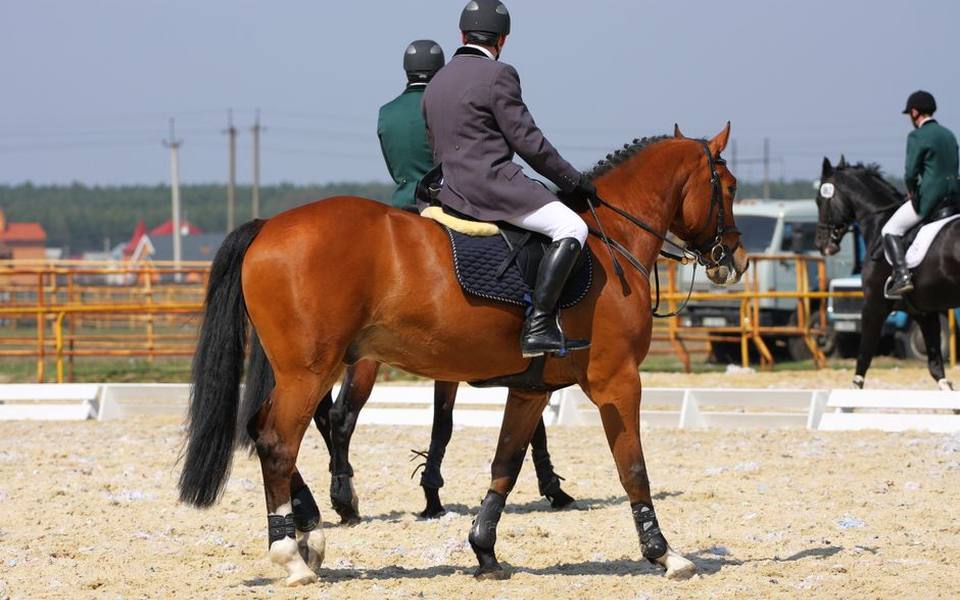
Advanced composite shanks have largely replaced heavy tempered steel in performance footwear. Lightweight shanks constructed from carbon fiber or molded composite materials flex naturally at the ball of the foot while resisting torsional twisting along the arch. This allows the foot to articulate comfortably over uneven arena footings while maintaining absolute rigidity across the stirrup iron. The result is significantly reduced strain on the plantar fascia, Achilles tendon, and lower back after long days of riding.
Furthermore, modern manufacturers have engineered high-performance outsoles using proprietary vulcanized rubber blends that withstand acidic stable acids, moisture, and extreme temperature fluctuations without cracking. These outsoles incorporate channeled dirt-release tracks along the tread edges, preventing sticky clay footings from packing into the sole. Whether riding in specialized schooling arenas or training young prospects at stables with horse training programs, riders now enjoy athletic shoe comfort without compromising safety standards.
Measuring Calf Width, Height, and Stirrup Clearance
Purchasing tall English boots or fitted Western footwear without accurate measurements almost always leads to disappointment. For tall boots, you must measure your calf over the riding breeches and socks you plan to wear. Using a soft seamstress tape, measure around the widest point of both calves while sitting with your feet flat on the floor and knees bent at a ninety-degree angle. Measure both legs carefully, as many riders have a dominant calf that is up to half an inch larger than the other.
Next, determine the shaft height by measuring from the floor beneath your bare heel up the back of your leg to the crease behind your knee. Tall boots inevitably drop between one-half to one full inch as the leather breaks in around the ankle joint and forms accordion flex wrinkles. Because of this anticipated settling, new tall boots should feel uncomfortably tall behind the knee initially, gently pressing against the hamstring tendon when you bend your leg on day one.
Foot width and toe box volume must also align with your stirrup width. In the stirrup iron, a rider should maintain approximately one-quarter to one-half inch of clearance on either side of the widest point of the boot sole. If the boot fits too snugly between the iron branches, it risks hanging up during a fall; if the stirrup is excessively wide, your foot can slide sideways off-center, destabilizing your base of support.
Integrating Boots into Practical English Riding Attire
Proper riding footwear must coordinate seamlessly with your everyday english riding wear to perform comfortably and prevent chafing. Tall boots require technical knee-high riding socks manufactured from thin, moisture-wicking microfibers around the shaft paired with cushioned cotton soles. Wearing bulky wool or thick cotton athletic socks inside tall boots restricts blood circulation through the calf, bunches behind the ankle, and makes zipping the boots difficult.
Breeches and jodhpurs also affect boot fit through the ankle and calf. Traditional breeches designed for tall boots end around the lower calf with flat elastic or hook-and-loop cuffs that eliminate bulk inside the boot shaft. Modern breeches feature integrated mesh stretch panels that wrap the lower leg like compression wear, allowing the boot leather to sit flush against your skin without bunching fabric against your shin or rubbing your calf raw during long schooling sets.
For daily schooling, the classic combination of paddock boots and matching leather or suede half chaps offers a practical, economical alternative to wearing costly tall boots around the barn. Ensure the half chap zips firmly from top to bottom or bottom to top depending on design, closing snugly over the paddock boot throat. This configuration seals out sand, arena dust, and arena footing while delivering the same leg protection and grip you need for rigorous flatwork.
Selecting Full Grain Leather Versus Weatherproof Synthetics
Choosing between premium full-grain leather and modern synthetic equestrian boots depends on your budget, riding frequency, and willingness to maintain tack. Full-grain calfskin remains the gold standard for riders seeking exceptional feel, breathability, and custom-molding properties. Leather adapts dynamically to the unique contours of your ankle and leg over time, creating a bespoke fit that synthetic materials cannot duplicate. However, leather is porous and susceptible to damage from water, stall ammonia, and fine arena grit.
Synthetic leather alternatives, including polyurethane and micro-synthetic coated materials, have improved dramatically in texture, stretch, and visual presentation. Synthetic boots are typically one hundred percent vegan, impervious to mud and rain, and require zero oiling or saddle soap; you simply wipe them clean with a damp sponge or rinse them under a hose after a muddy day in turnout paddocks. For riders on a budget, wet-climate equestrians, or fast-growing juniors, synthetics deliver tremendous value.
Hybrid options also exist, pairing synthetic outer shafts with full-grain leather inner calf panels. This configuration combines the easy-care durability of synthetic exteriors with the natural friction, grip, and flex of real leather where your leg contacts the saddle. When deciding on materials, evaluate whether your boots will spend more time in clean, dusted show rings or wading through muddy paddocks and wash racks during daily barn chores.
Breaking In Footwear and Prolonging Sole Life
Breaking in a stiff new pair of riding boots requires patience and gradual conditioning to avoid severe heel blisters and bruised ankles. Never wear brand-new tall boots directly into a rigorous clinic or competition. Begin by wearing them around the house with damp riding socks for twenty to thirty minutes at a time, performing heel drops off a stair tread to encourage the ankle leather to soften and form its natural horizontal break folds.
Heel risers, which are small wedge-shaped foam or leather inserts placed beneath the insole inside the heel cup, provide invaluable relief during the break-in phase. These temporary wedges lift your heel upward roughly a quarter of an inch, preventing the top rim of the boot from cutting into the back of your knee while the ankle leather settles and drops. Once the boot has dropped to its permanent height, the risers can be removed easily.
Routine maintenance preserves your investment for years of hard riding. After every ride, use a soft, damp towel to wipe away horse sweat, sand, and stable dust, which act as micro-abrasives against leather seams. Condition the outer leather monthly with a quality cream polish or specialized leather balm, avoiding heavy oils that over-soften the shaft and cause boots to sag. Insert structured cedar or ventilated plastic boot trees whenever your tall boots are off your feet to maintain their vertical shape and prevent the ankle from collapsing permanently.
Published 2026-09-20 · reviewed with each rebuild, last September 2026.
Find boarding stables near you
The directory lists 16,945 boarding stables by state and city — pick your state or use the “Near me” button in the header.
More guides
-
 Money
MoneyUnderstanding Monthly Horse Boarding Expenses and Stable Fees
-
 Owning
Understanding Friesian Horse Ownership: Traits, Costs, and Daily Care
-
 Owning
Understanding Riding Disciplines, Essential Tack, and the True Costs of Horse Ownership
-
 Money
MoneyUnderstanding the Costs of Getting Started in the Saddle
-
 Buying
Understanding Initial Horse Purchase Prices by Breed, Size, and Training
-
 Service
The Career Path of a Farrier: Education, Training, and Timeline
-
Owning
Choosing Between Alfalfa and Orchard Grass Hay for Horses
-
 Money
MoneyEssential Horse Ownership Expenses: Leasing, Insurance, and Maintenance
-
 Owning
Complete Guide to Cattle Breeds: Dairy vs Beef Cow Selection and Care
-
 Buying
Horse Buying Guide: Breed Selection, Market Prices, and Classifieds
-
 Owning
Small Farm Livestock Breeding: Goats, Sheep, Pigs, and Poultry
-
 Buying
Miniature Livestock Guide: Mini Cattle, Ponies, and Pocket Equines
-
 Owning
The Complete Guide to Horse Boarding, Stables, and Facilities
-
 Owning
Rubber Stall Mats and Horse Stall Flooring: A Complete Guide
-
 Buying
Guide to Horse Breeds, Breeders, and Equine Artificial Insemination
-
 Owning
Equine Health Care: Colic Signs, Deworming Charts, and Joint Supplements
-
 Owning
Complete Guide to Equine Fly Control: Sprays, Repellents, and Fly Sheets
-
 Safety
Equine Riding Helmets: Sizing, Safety Standards, and Selection Guide
-
 Service
Beach Horseback Riding and Trail Riding Tours Guide
-
 Service
Equine Training Fundamentals: Groundwork, Lunging Techniques, and Equestrian Vaulting
-
 Service
Equine-Assisted Therapy and Psychotherapy: A Practical Guide to Methods, Benefits, and Programs
-
 Buying
A Complete Guide to Buying a Horse: Breeds, Equine Sales, and Insurance
-
 Owning
Complete Guide to Horse Hoof Care, Farrier Services, and Hoof Boots
-
 Owning
A Complete Guide to Horse Grooming, Sheath Cleaning, Massage, and Routine Wellness
-
 Owning
Horse Barn Setup, Stall Infrastructure, Arenas, and Facility Equipment
-
 Buying
Beef and Dairy Cattle Breeds: Buyer's Guide, Traits, and Livestock Care
-
 Owning
Homestead Livestock Guide: Raising Sheep, Goats, Pigs, and Poultry
-
 Service
Equine Dentistry Guide: Floating Teeth, Routine Care, and Choosing a Practitioner
-
 Owning
Equine Saddles and Tack Care: Selection, Fit, Cleaning, and Room Setup
-
 Owning
Horse Blankets and Sheet Guide: Fit, Turnout Types, and Fly Protection
-
 Safety
Equestrian Riding Apparel and Gear: Helmets, Boots, and Show Attire
-
 Owning
Equestrian Gift Guide: Practical and Thoughtful Presents for Horse Lovers and Riders
-
 Service
Horse Transportation Guide: Hauling Services, Trailer Rentals, and Layover Stables
-
 Owning
Designing and Managing a Boarding Stable: Facility Planning, Barn Construction, and Daily Operations
-
 Owning
Horse Health Care, Fly Control, and Preventative Vet Schedules
-
 Service
Beginner Equestrian Camps and Riding Programs: How to Choose the Right Barn
-
 Safety
A Complete Guide to Western Riding Helmets, Barn Footwear, Halters, and Hoof Gear
-
 Service
Guided Horseback Riding Tours & Vacation Stables Guide
-
 Buying
Buying and Selling Horses: Sales Auctions & Breed Marketplaces